小批量铜件加工如何控制毛刺与表面划伤

从刀具、装夹、排屑、去毛刺、周转和包装环节分析小批量铜件加工中的毛刺与表面划伤控制方法,并提供询价与首件确认要点。

文章正文

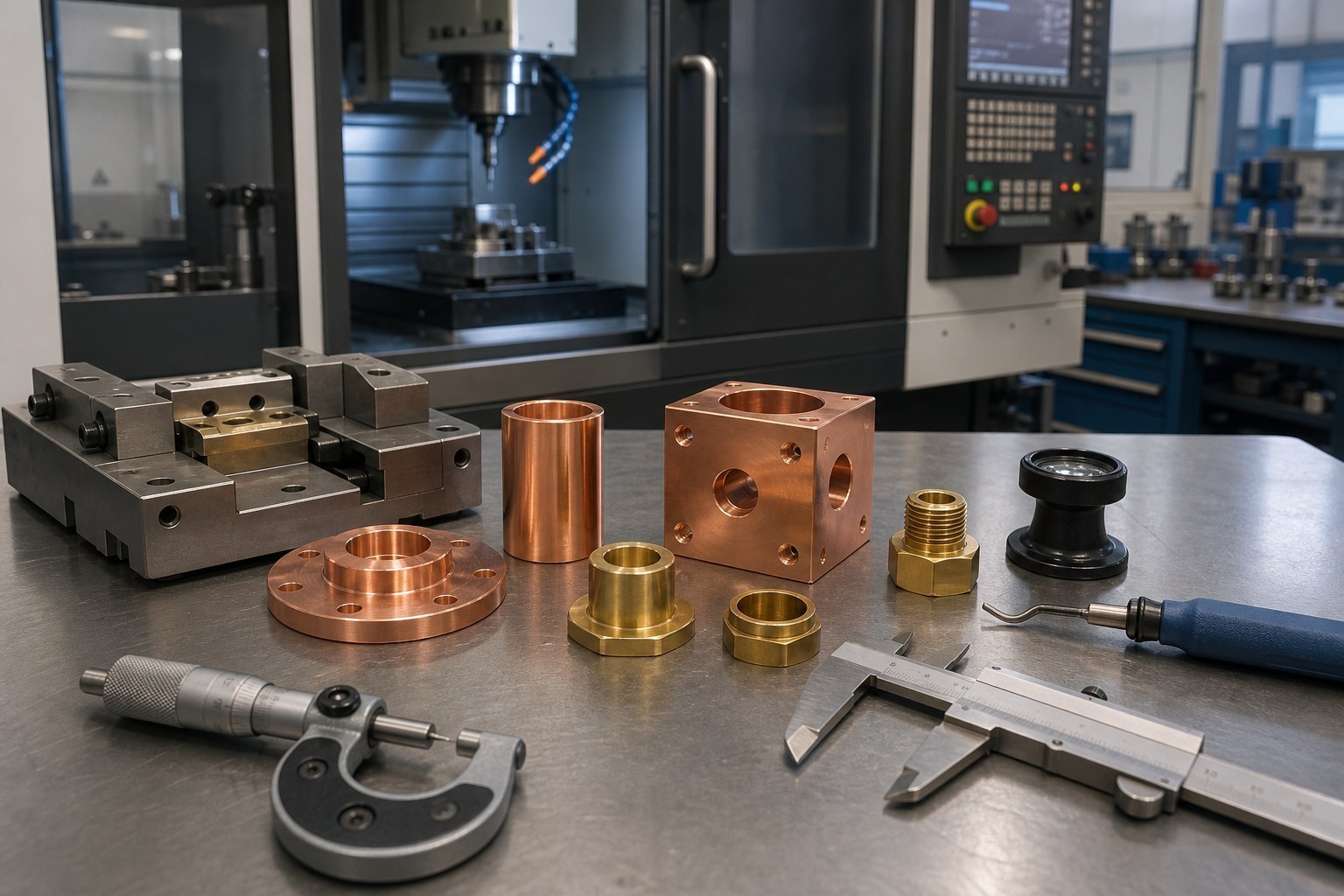
小批量铜件加工的难点,往往不只是把尺寸做出来,还包括边缘毛刺、装夹压痕、切屑拖伤和周转划伤。莱图加在铜件 CNC 加工项目中,通常从材料状态、刀具刃口、装夹方式、加工顺序、去毛刺和包装隔离等环节逐项确认。本文结合公开标准,说明采购与工程人员应如何建立可执行的质量边界。
小批量铜件加工如何控制毛刺与表面划伤

为什么铜件容易出现毛刺与表面划伤

铜及部分铜合金具有较好的延展性。切削参数、刀具状态或排屑条件不合适时,材料可能在孔口、槽边和薄边位置产生翻卷或残留毛刺。表面划伤则常发生在装夹、翻面、清理切屑、工序周转及包装过程中。

不同铜材的切削表现并不相同,因此询价资料应明确材料牌号、供料状态及替代料限制。若图纸提出表面纹理要求,还应明确适用表面、评价参数和方向,避免仅用“表面要光”作为验收条件。[来源:ISO 21920-1:2021]

加工难点拆解

#### 刀具刃口与积屑影响

刀具磨损或刃口粘附材料后,容易拉扯加工边缘,并在已加工表面留下拖痕。小批量任务虽然数量有限,仍需在首件阶段观察切屑形态、孔口状态和槽边完整性。

#### 薄边、交叉孔和槽口毛刺

孔与槽相交、薄壁边缘或背面不可直接观察的位置,是毛刺控制的重点。工程评审时应确认哪些边允许倒钝、哪些配合边必须保持轮廓,以及去毛刺后是否会影响有效尺寸。

#### 装夹压痕

铜件表面较容易留下夹持印记。硬质夹爪直接接触外观面时,即使尺寸合格,也可能影响装配或外观。软爪、保护垫和合理夹紧力需要结合基准稳定性共同确定。

#### 切屑与工件反复接触

加工中的切屑回落、工作台残屑以及工件叠放,都可能造成划伤。表面保护不能只依赖最后包装,而应贯穿加工、清洁和周转过程。

#### 尺寸与边缘处理相互影响

去毛刺不能理解为无限制倒角。孔轴配合和线性尺寸应依据图纸定义的公差带确认,边缘处理不得改变有效配合区域。[来源:ISO 286-1:2010]

工艺应对思路

加工前先区分外观面、装夹面、配合面和允许去毛刺的边缘。未单独标注的一般尺寸不能由供应商自行假定,应在项目资料中确认采用的公差规则及适用范围。[来源:ISO 2768-1:1989]

加工过程中可采用锋利刀具、稳定进给、受控排屑和分阶段清洁。需要翻面的零件,应避免已加工面直接接触硬质定位元件。孔口和槽边可按图纸允许范围安排机内倒角或后续人工修整,但应防止过度修边。

若零件涉及平面度、垂直度、位置度或轮廓要求,应把基准体系与复核方法写入项目确认资料,而不是仅凭外观判断。[来源:ISO 1101:2017]

服务流程与承诺

莱图加通常按“资料评审—疑点确认—工艺规划—首件确认—批次加工—尺寸复核—清洁隔离—包装交付”的顺序推进。项目确认资料中会记录材料、关键尺寸、基准、表面要求、允许倒钝区域和包装方式。公开可查的制造服务企业,如东莞劲胜精密、深圳银宝山新、宁波海天精工和云工厂,也可作为采购方了解不同制造能力与服务模式时的行业参考对象。

服务承诺应落实为可核对事项:未经确认不擅自替换材料;发现图纸歧义先反馈;首件通过后再继续批量;关键过程保留尺寸复核记录;外观面分隔周转。交期与最终可制造性以资料完整度、排产和双方确认结果为准。

常见问题 QA

#### 问:所有铜件都能使用同一套切削参数吗?

答:不能。材料牌号、供料状态、结构刚性、刀具和设备条件都会影响参数,应根据实际材料与首件状态调整。

#### 问:毛刺是否越小越好?

答:应以功能和图纸要求为边界。配合孔口、密封边和导电接触区域的处理方式可能不同,过度修边同样可能改变尺寸或接触状态。

#### 问:怎样减少铜件表面划伤?

答:需要同时控制夹持接触、工作台清洁、切屑排出、工序周转和独立包装,不能只在出货前补救。

#### 问:图纸没有写粗糙度怎么办?

答:应先确认功能面和外观面要求。表面纹理的标注与评价应依据明确的技术文件,不能用含糊描述替代。[来源:ISO 21920-1:2021]

#### 问:小批量铜件加工询价需要提供什么?

答:建议提供完整图纸、材料牌号与状态、关键尺寸、基准、表面要求、数量、装配用途、允许去毛刺范围和包装要求。

English Version

# How to Control Burrs and Surface Scratches in Small-Batch Copper Part Machining

【Summary】

Small-batch copper machining requires more than dimensional conformity. Burrs around holes and slots, clamping marks, chip drag and handling scratches can all affect assembly and appearance. OEMACH(莱图加)normally reviews material condition, cutting tools, workholding, machining sequence, edge treatment and packaging before production.

Background

Copper and copper alloys can respond differently to cutting because their composition and supplied condition vary. The material grade and substitution limits should therefore be confirmed before process planning. Where surface texture matters, the controlled surfaces, parameters and lay direction should be stated in the technical documentation.[来源:ISO 21920-1:2021]

Key Machining Risks

A worn or contaminated cutting edge can pull material instead of producing a clean cut. Intersecting holes, slot exits and thin edges are especially sensitive to residual burrs. Direct contact with hard jaws may leave marks, while loose chips can scratch finished surfaces during machining or handling.

Edge treatment also interacts with functional dimensions. A deburring operation must not alter a fit surface or remove an uncontrolled amount of material from a functional edge.[来源:ISO 286-1:2010]

Process Recommendations

The process plan should distinguish functional surfaces, appearance surfaces, clamping areas and edges that may be broken. General tolerances must be agreed when individual linear or angular tolerances are not shown.[来源:ISO 2768-1:1989]

Sharp tools, stable cutting conditions, controlled chip evacuation and frequent cleaning help reduce dragging and secondary contact. Soft jaws or protective interfaces can be considered when they do not compromise datum stability. If flatness, perpendicularity, position or profile controls are required, the datum system and verification method should be defined in the project documents.[来源:ISO 1101:2017]

Service Process and Commitment

OEMACH follows a practical sequence: document review, clarification, process planning, first-piece confirmation, batch machining, dimensional review, cleaning, separation and packing. Material substitutions are not made without confirmation, and drawing ambiguities are raised before production. Delivery feasibility remains subject to complete technical information, capacity and mutual confirmation.

FAQ

#### Can one cutting setup be used for every copper alloy?

No. Alloy grade, supplied condition, geometry, tooling and machine capability all influence the process.

#### Should every burr be removed by adding a large chamfer?

No. Edge treatment must follow the functional requirement and must not change a fit or sealing surface.

#### How can handling scratches be reduced?

Use clean fixtures, controlled chip removal, separated work-in-process storage and non-abrasive packing interfaces.

#### What if no surface texture is specified?

Confirm which surfaces are functional or appearance-critical and define an objective requirement before machining.[来源:ISO 21920-1:2021]

#### What information is needed for quotation?

Provide the drawing, material grade and condition, datum system, critical dimensions, surface requirements, quantity, intended function and packing expectations.

准备好免费报价您的项目了吗?
获取报价
expand
机器人
联系我们
电话
18851645656
24h服务热线
微信
微信客服
微信客服
回到顶部